Ecological Material & Memory: Spatial Installations
This body of work intervenes in the nature of ecological material through processes of germination, decay, and transformation, observing the effects and consequences of these interventions. Alongside direct manipulations, the works acknowledge and support the potential of accidental formations and unforeseen developments. Working primarily with living plant matter, these spatial installations examine how growth unfolds within spatial constraints and how organic temporality intersects with memory.
The works engage the fragile threshold between life and dissolution by placing living materials within constructed environments that frame, limit, or mediate their development. In this context, memory is considered alongside the temporal traces that emerge through the plant’s developmental process. The duration between germination and decay generates a memory within the work itself, while simultaneously becoming a medium through which the artist reflects on and questions her own personal past.
By situating growth within domestic and architectural contexts, the installations investigate how ecological life, personal memory, and spatial structures intertwine over time, and how certain boundaries begin to blur. Alongside germination and growth, absence, encounters, and moments of disappointment also emerge as intrinsic elements within the natural flow of the process.
Reanimation (2025)
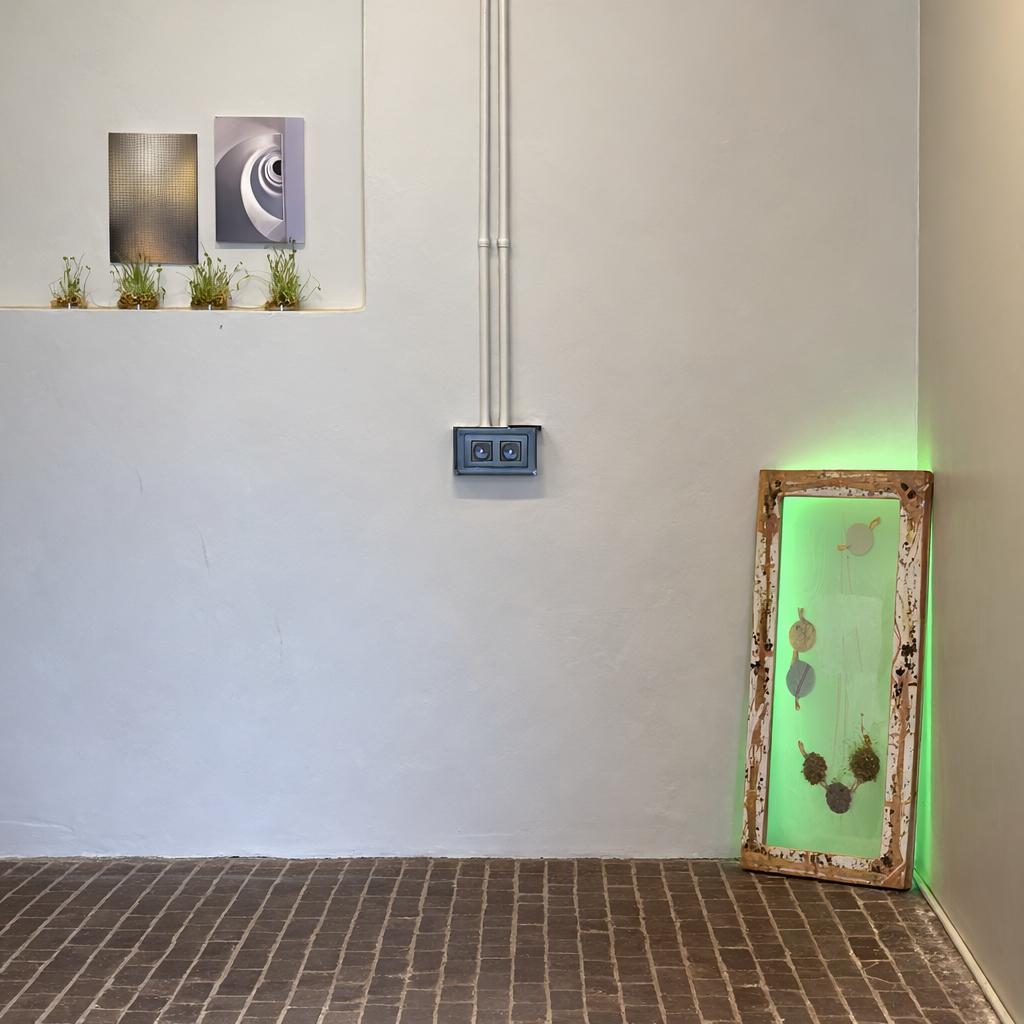
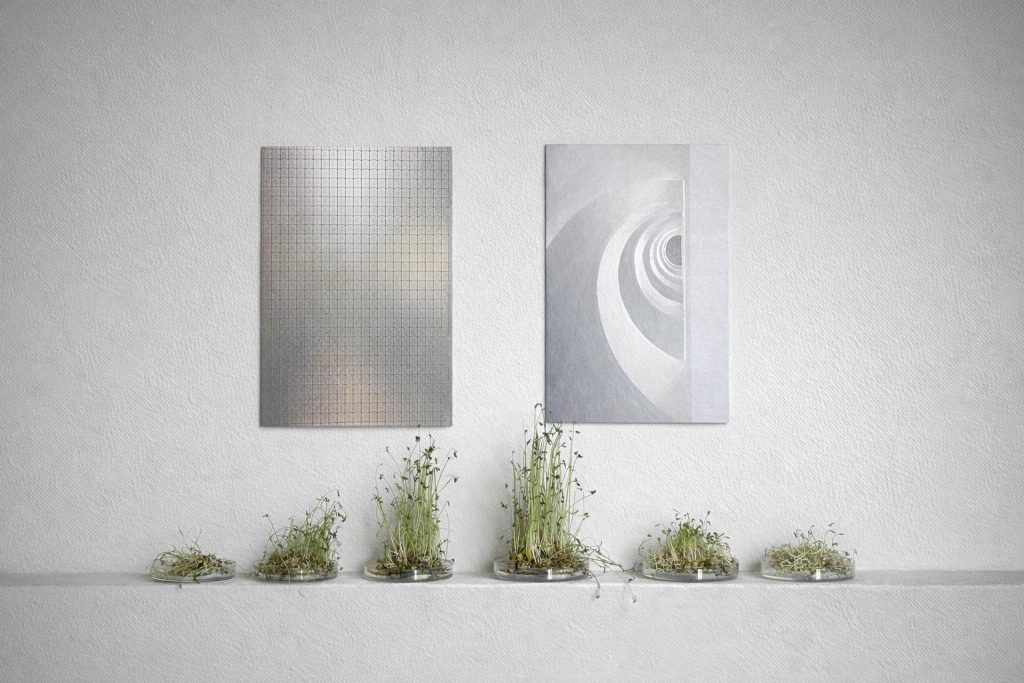
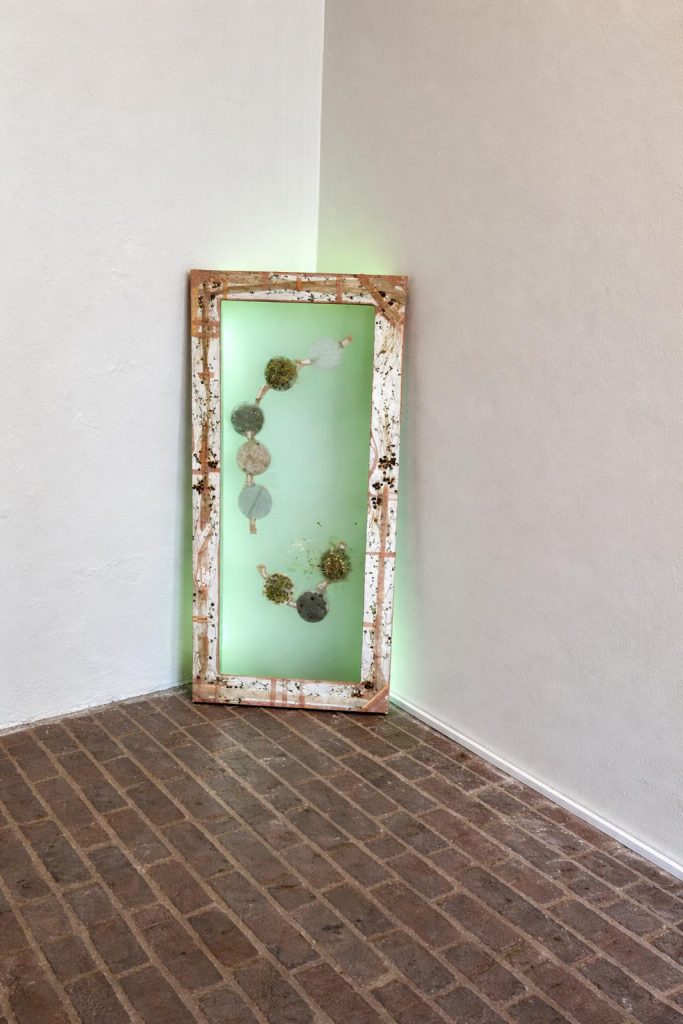
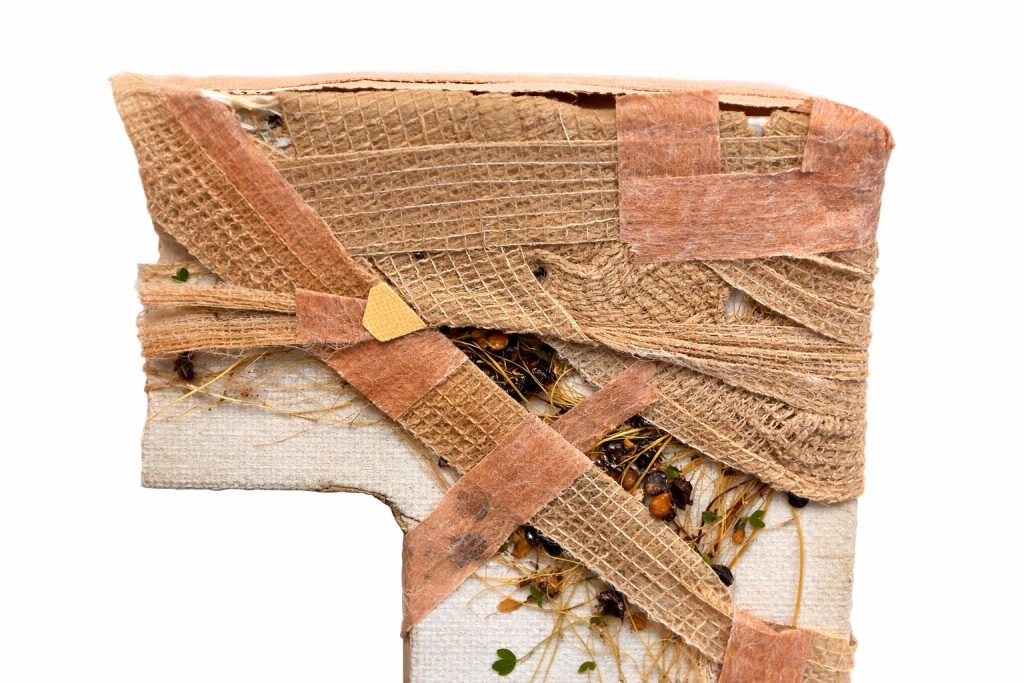
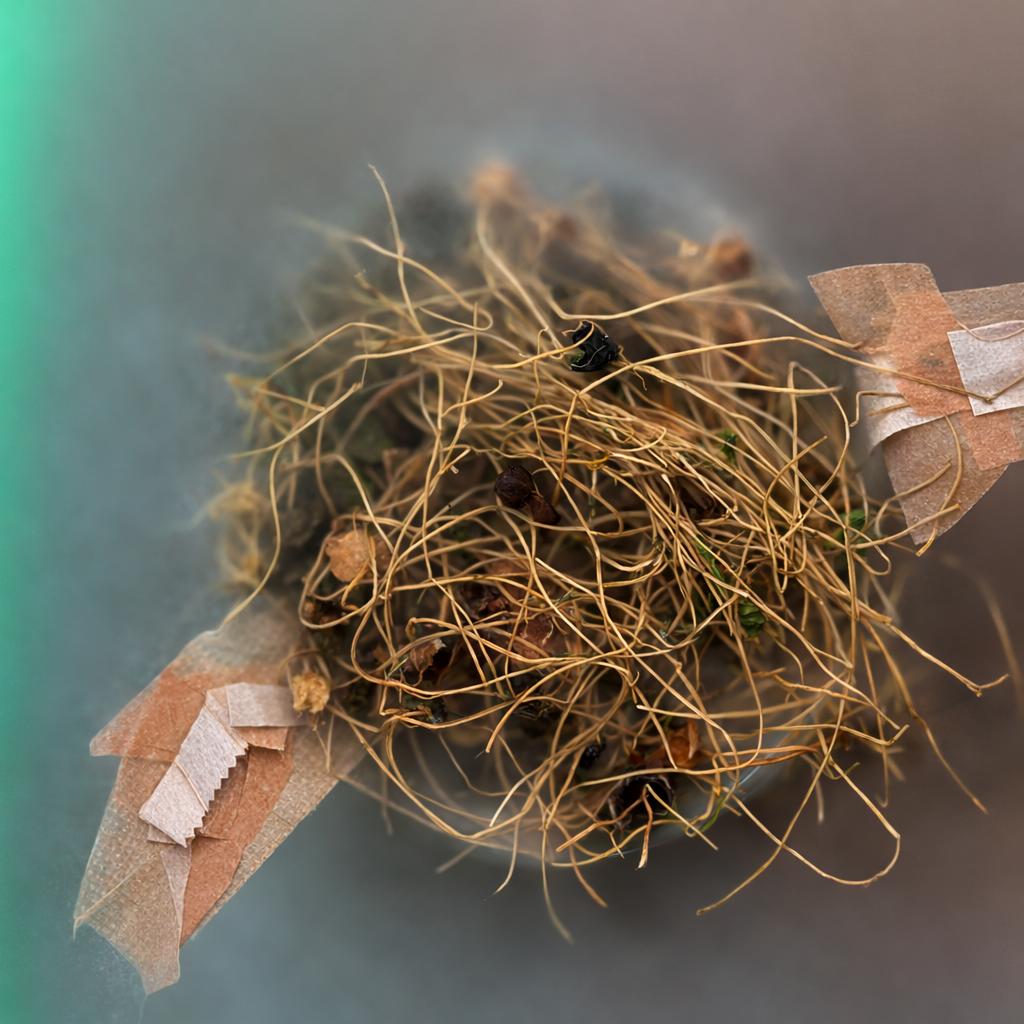
Reanimation (2025) is a site-responsive installation designed to be positioned vertically between two walls within an interior space, establishing a direct dialogue with its architectural surroundings. The work consists of two main components. The first is a frosted glass surface framed with concrete dust. Open to interpretations as a window, door, or passage, this structure contains, behind its translucent surface, petri dishes arranged in reference to a spiral form. Within them, lentil seeds at different stages of their life cycle—some germinating, others already in decline—are placed.
Illuminated at intervals by LED light, the installation creates a controlled yet fragile environment in which growth unfolds under continuous observation and care. The frosted surface allows partial visibility while producing distance between the viewer and the seeds. Despite the possibility of close proximity, the glass maintains a subtle boundary through its ambiguity.
The second component includes two photographs presented alongside petri dishes containing the same sprouting seeds. One image depicts a spiral staircase void, while the other is a detailed view of a frosted glass surface.
Together, these elements evoke the clinical atmosphere of reanimation units, where life is sustained through technological intervention. Within this constructed setting, the seeds germinate, weaken, and decay, rendering temporality visible as an ongoing process. Intervention and care intertwine with fragility and uncertainty, while the repetition of cycles begins to challenge mental clarity.
In this work, reanimation functions not only as a biological condition but also as a conceptual framework. The transforming life cycle of the plant becomes a medium through which personal memory—particularly experiences of waiting, vulnerability, and suspended time—is reconsidered.
Hoşça kal (2024)
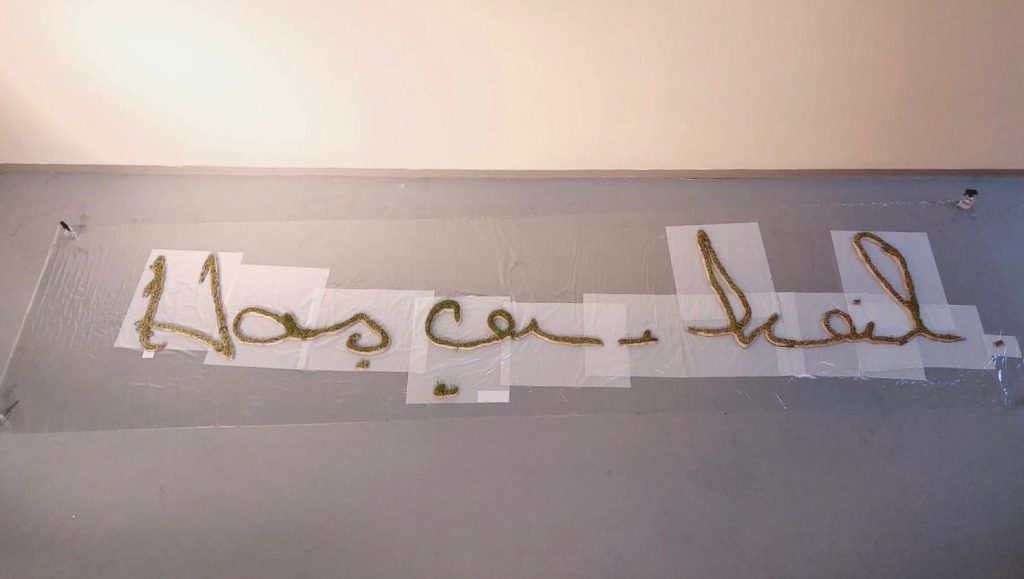
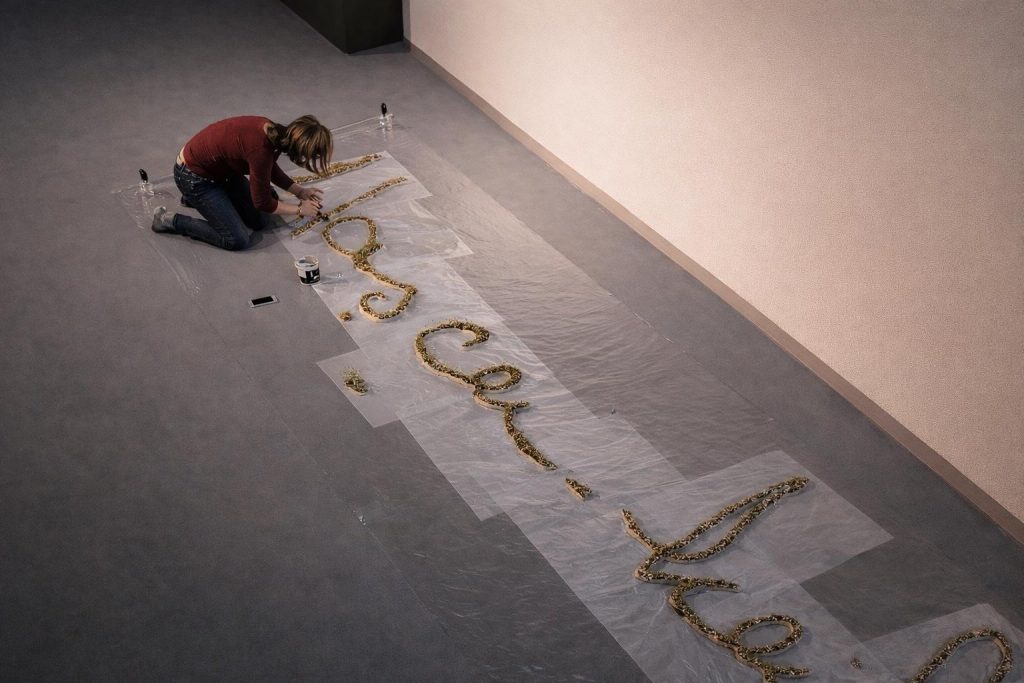
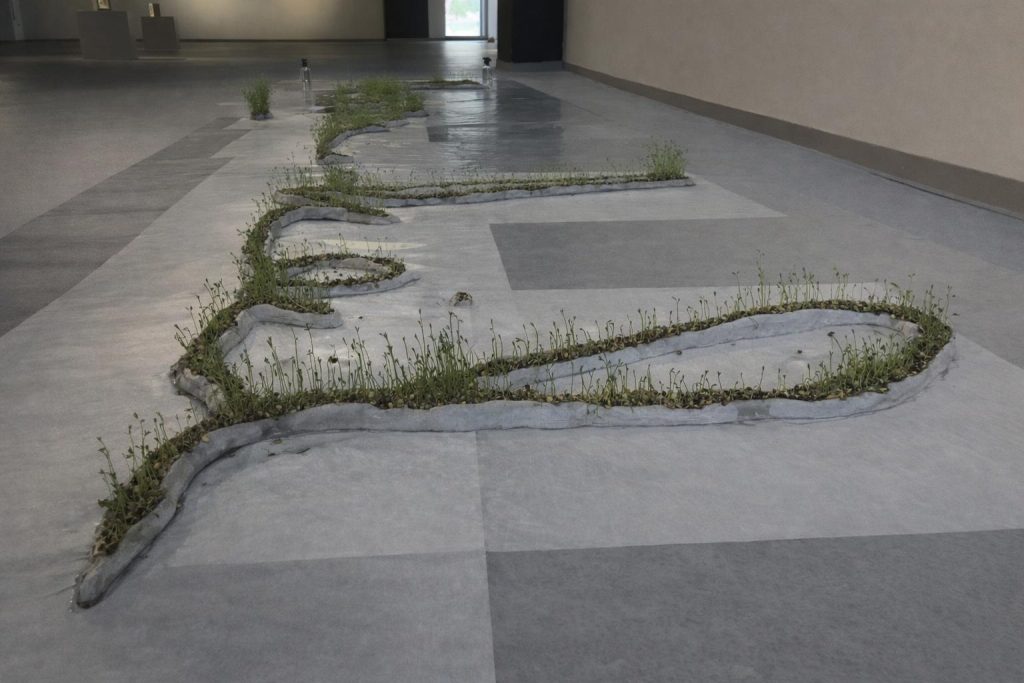
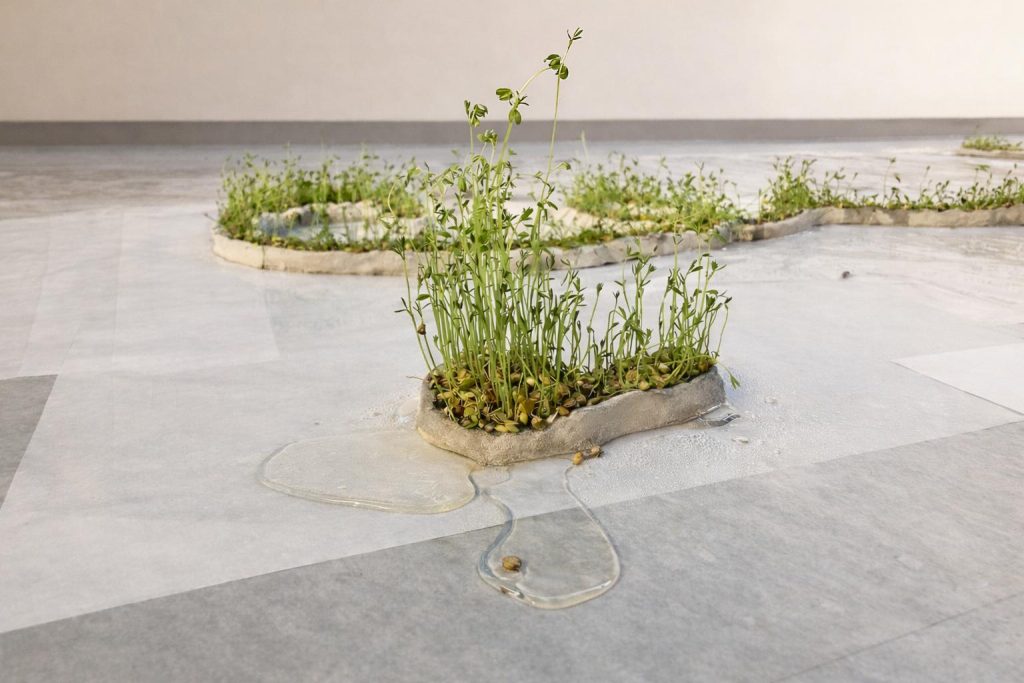
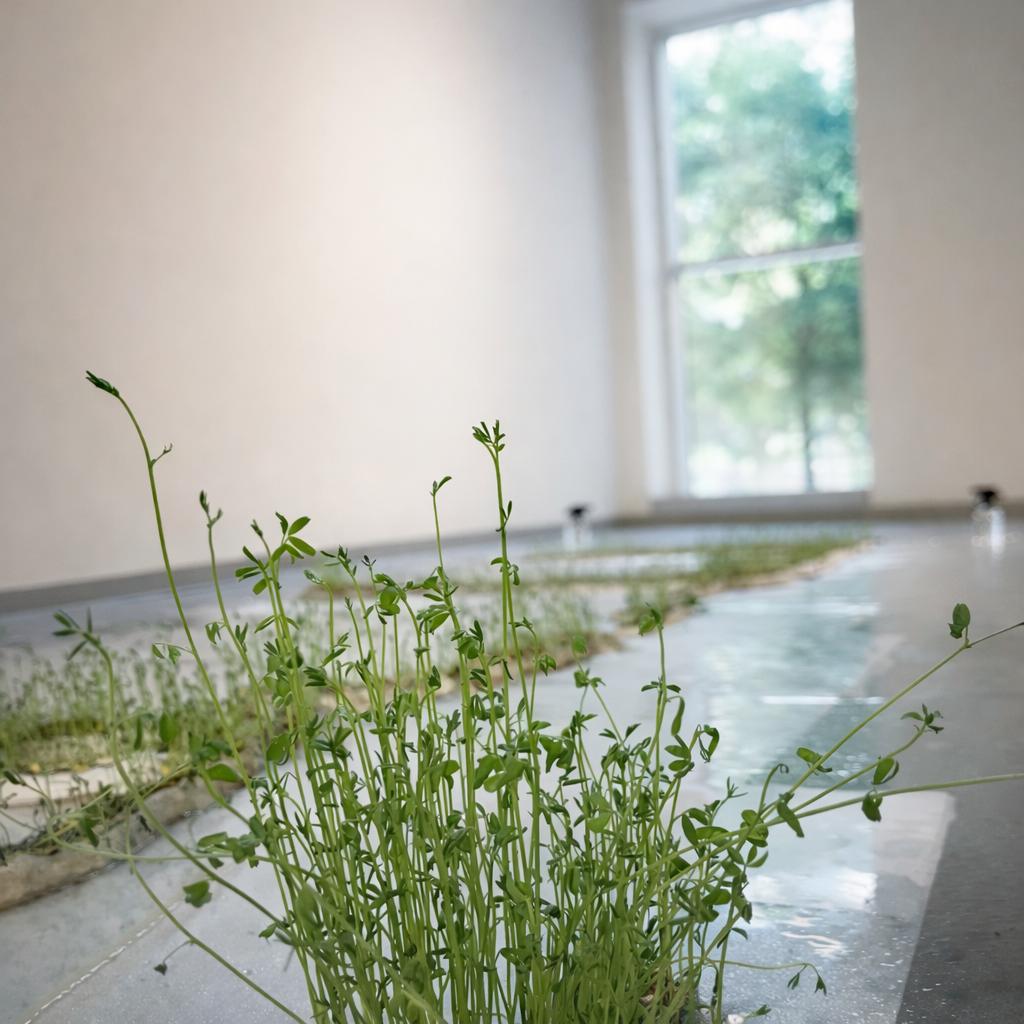
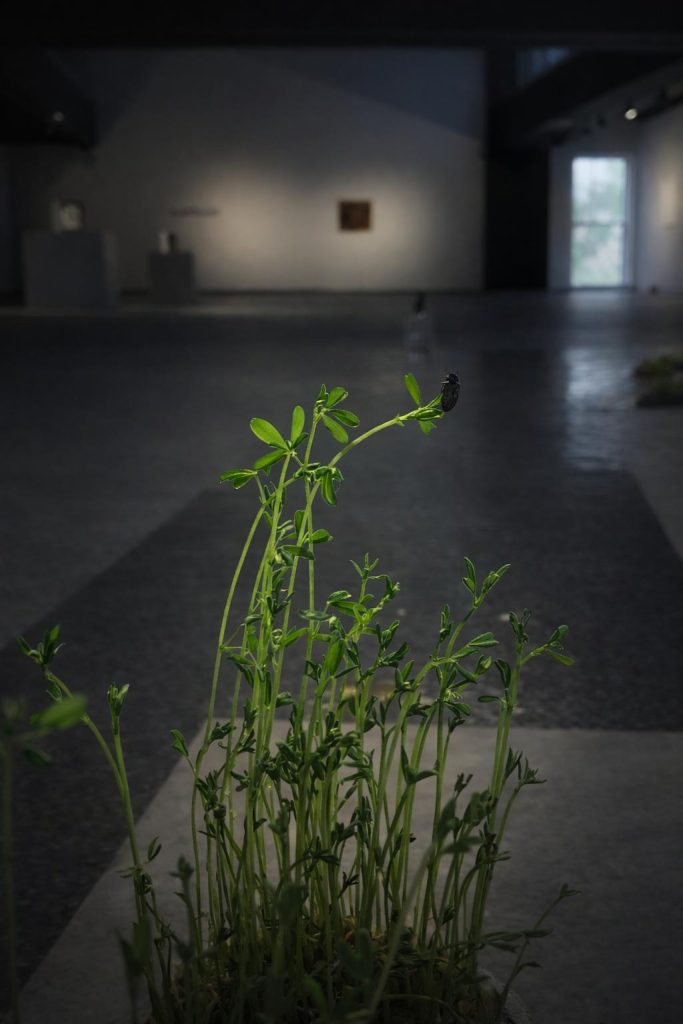
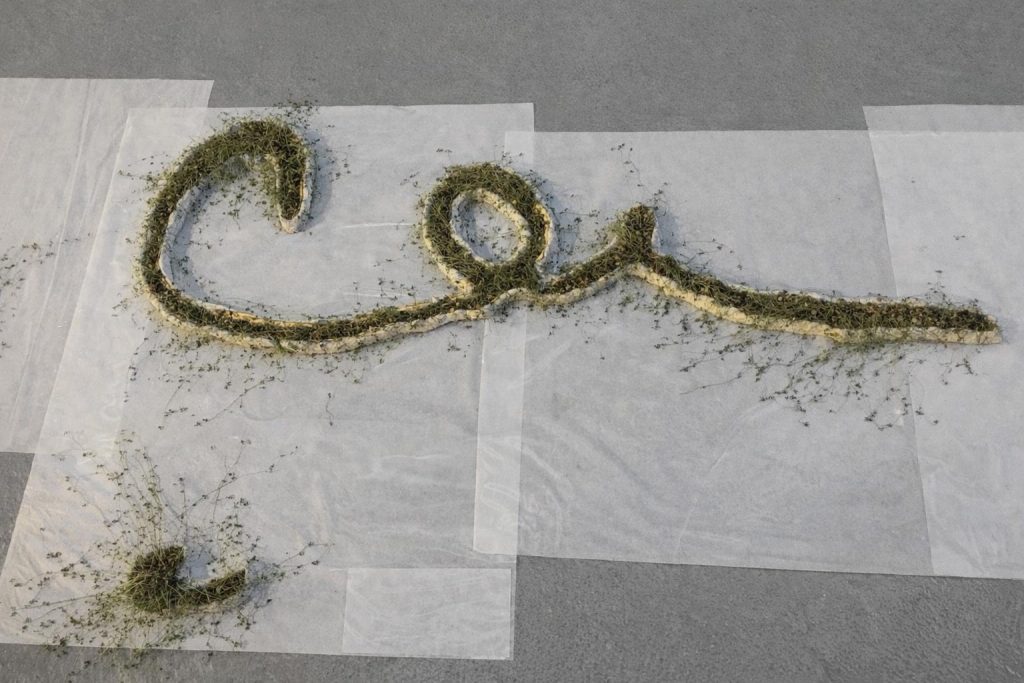
Hoşça kal brings together concrete and germinating lentil seeds within a structure shaped by personal memory. The work is based on a letter written by the artist’s mother to her father while they were living in different countries. The closing phrase of the letter, “Hoşça kal,” was enlarged and reconstructed in concrete. This intimate gesture of correspondence was transformed into a permanent and spatial form through a process faithful to the original handwriting: the concrete mortar was shaped by hand while still wet, and its inner areas were carved to create space for the seeds.
As the concrete began to set, each intervention left friction marks on the artist’s hands. The hardness of the material and the physical limits it imposed defined the boundaries of the gesture. In this way, the traces left by a pen on paper are re-enacted on the artist’s body, producing a sensory correspondence between writing and touch.
Sprouted seeds are placed within the concrete letters and sustained through daily care. The fragile vitality of germination unfolds within the rigidity of concrete, creating a tension between permanence and ephemerality, distance and continuity. The work remains responsive to environmental conditions such as temperature and light.
As the plants grow and eventually wither, the meaning of “Hoşça kal” shifts. What initially functions as an ordinary closing becomes, through the life cycle of the seeds, an enacted farewell. Memory here is not fixed within concrete; it emerges through growth, care, and eventual loss. Separation becomes not only spatial, but also temporal.
Drum Room (2015)
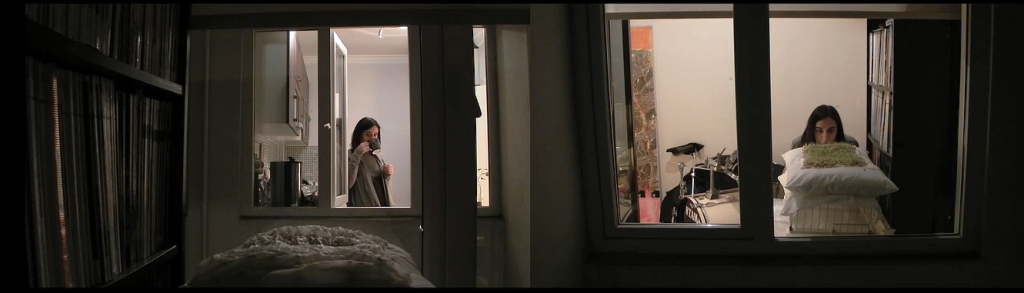
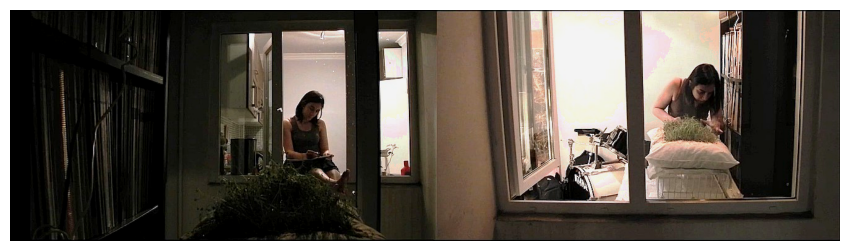
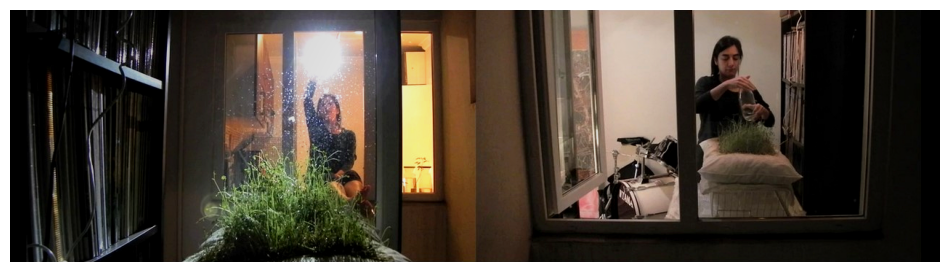
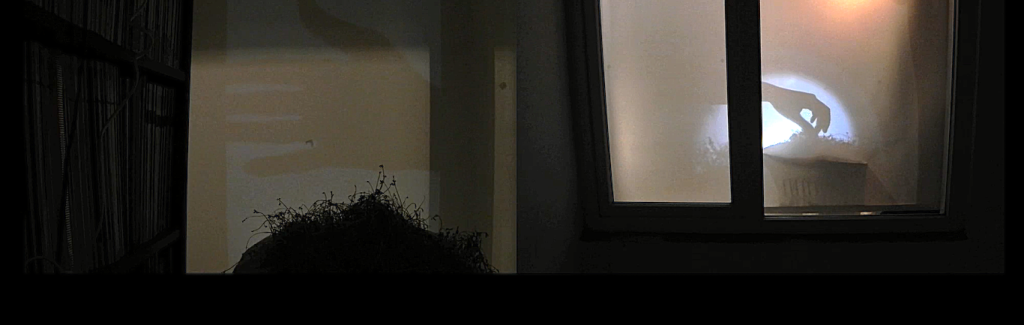
This video installation emerged from a process that functioned for the artist both as an observation and an experiment, later documented through video and presented as a video installation. The recordings were made in two rooms of the artist’s apartment that receive most of their light from the apartment void. One of these rooms is the kitchen, while the other is a small room used as a studio and storage space.
The artist recorded fixed video images directed toward the windows of these two rooms and later combined them simultaneously. In this way, the apartment void becomes an observational space between the two rooms, allowing the viewer to see both the act of care and its observation from the opposite room at the same time. Through this arrangement, the artist is placed in a position where she observes her own actions.
The work develops around a repetitive practice of care performed on consecutive days at approximately the same hours. The artist first enters the studio room to tend to lentil seeds germinating on a pillow, and then moves to the kitchen where the same surface can be observed from the opposite side. As the plants grow, moulded seeds are removed to maintain a healthier environment, and notes are taken throughout the process.
Over time, the lentils growing on the pillow gradually form a dense vegetal surface that begins to resemble a small landscape. In some moments of the video, the artist extends her legs toward this surface, relating her body to this miniature landscape. This gesture recalls the childhood experience of lying on grass, while simultaneously pointing to an artificial encounter with nature constructed within a domestic interior.
As in many of the artist’s works, the project revolves around memory and the relationship between domestic space and recollection. The apartment void recalls the kitchen of the artist’s childhood home, which also opened to a shared vertical space where sounds and smells from different apartments would converge.
Towards the end of the video, the plants begin to decay and emit a strong smell, revealing the fragile nature of the care practice and the inevitable coexistence of growth and decomposition.
Although a drum set is visible within the room where the video takes place, it remains silent throughout the work. This object functions as a latent source of sound that is present but never activated, reinforcing the atmosphere of stillness within the space.
Seasons II (2014)
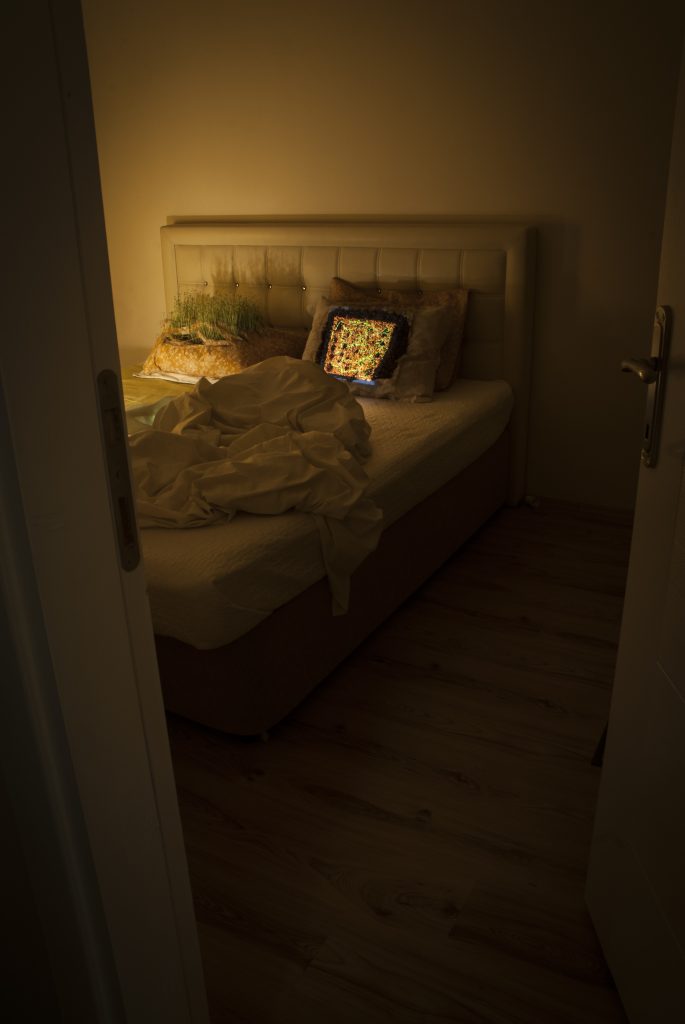
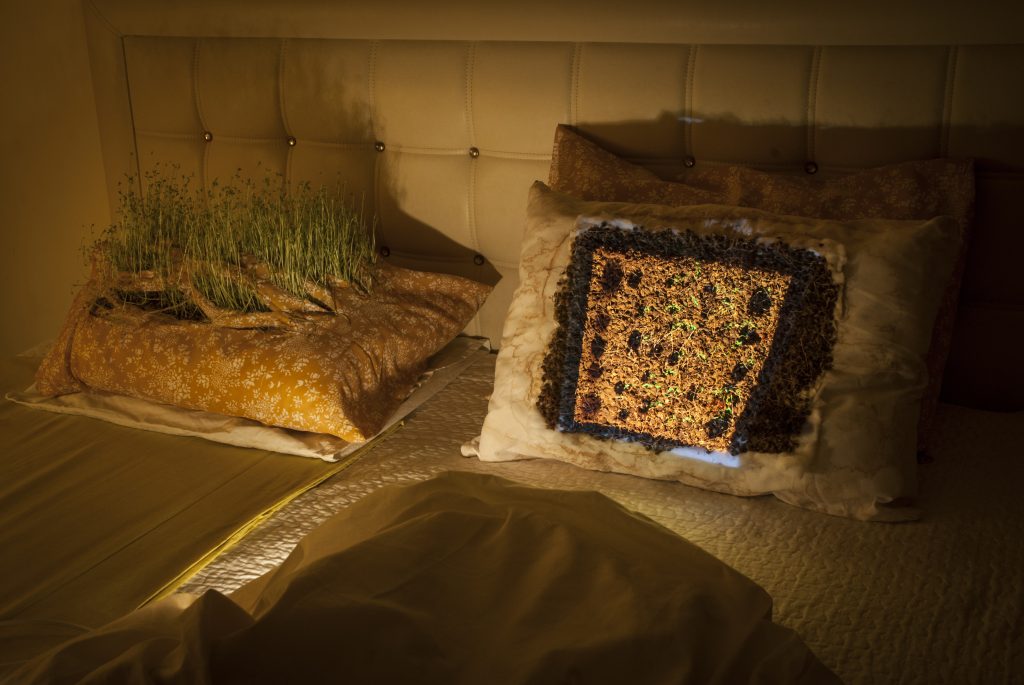
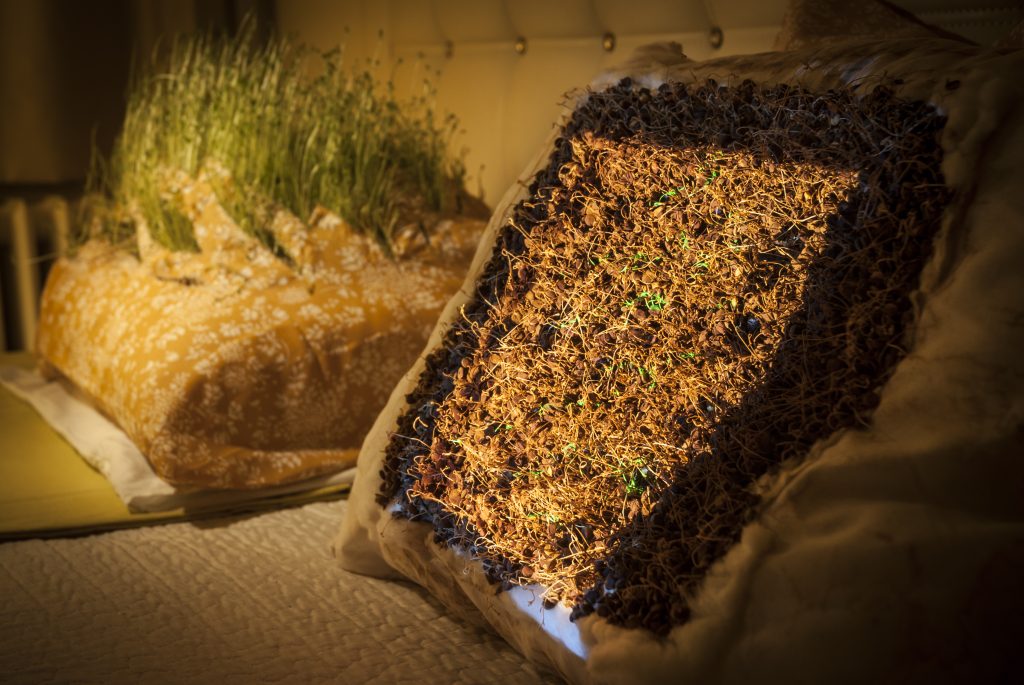
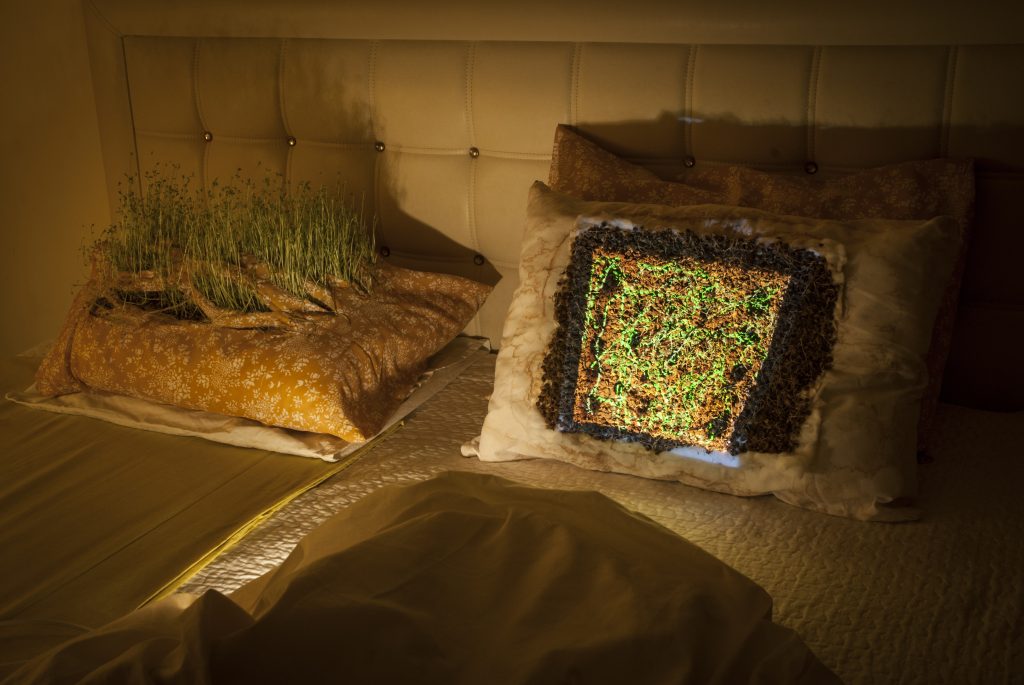
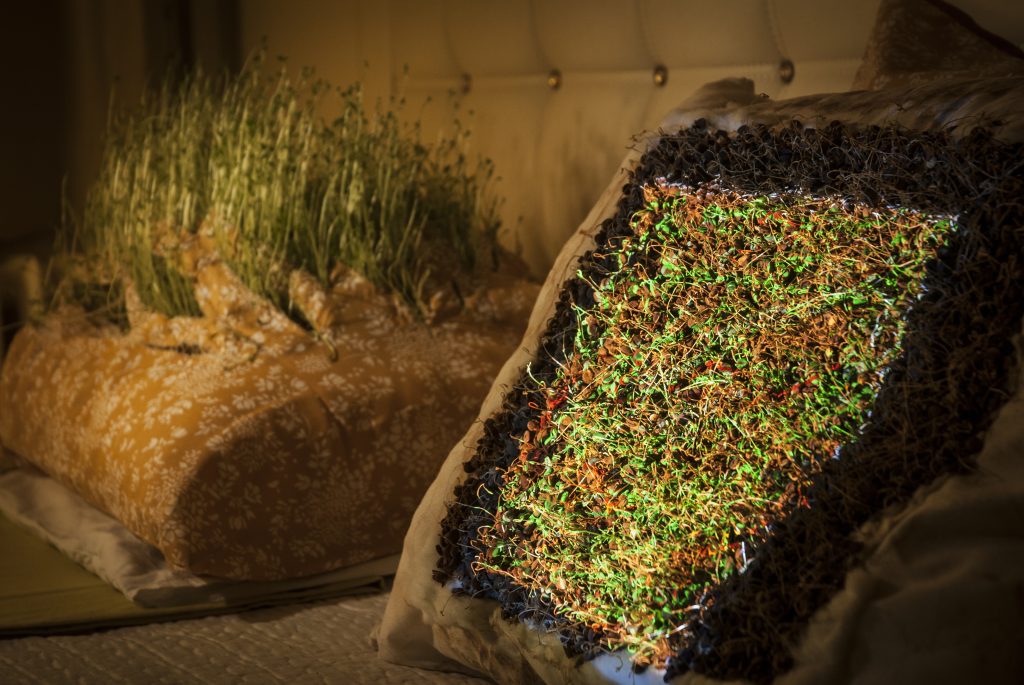
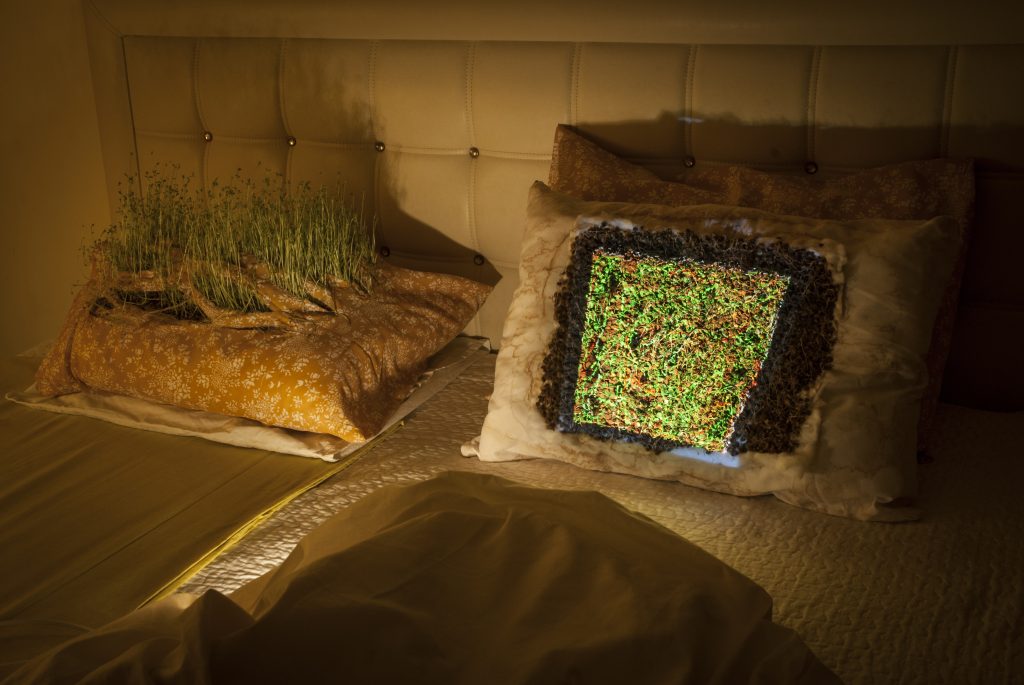
Seasons II (2014) is the second work in the Seasons series, exploring states of transition, fragility, and suspended life through a spatial installation.
The work is situated within a room that remains inaccessible to the viewer, who can only observe the scene through a partially open door. This controlled distance establishes a threshold between presence and separation, positioning the viewer as a witness to a condition they cannot access or intervene in.
At the center of the installation, a bed (200×200 cm.) is arranged with two pillows and two sheets, forming a subtle yet charged spatial composition. One pillow, positioned vertically, carries dried lentil seeds and withered plant fragments. A projection, concealed beneath a crumpled white sheet, casts a six-minute moving image onto this surface. Emerging from darkness, the projected image produces a fleeting impression of greening—an artificial revival that continuously appears and fades. The projected image does not restore life, but produces its appearance, suggesting a state in which vitality is simulated rather than sustained.
In contrast, a second pillow lies horizontally, supporting living green sprouts. Beneath it, a neatly folded sheet extends along the bed, introducing a quiet tension between order and entropy, care and decay. Through the interplay of projection, organic material, and spatial restriction, the work constructs a fragile condition in which life is not only present or absent, but continuously negotiated between organic growth and its artificial reproduction. The installation does not depict a narrative directly; instead, it invites the viewer into an ambiguous temporal state where growth, memory, and dissolution coexist.
Serum Tree (2008)
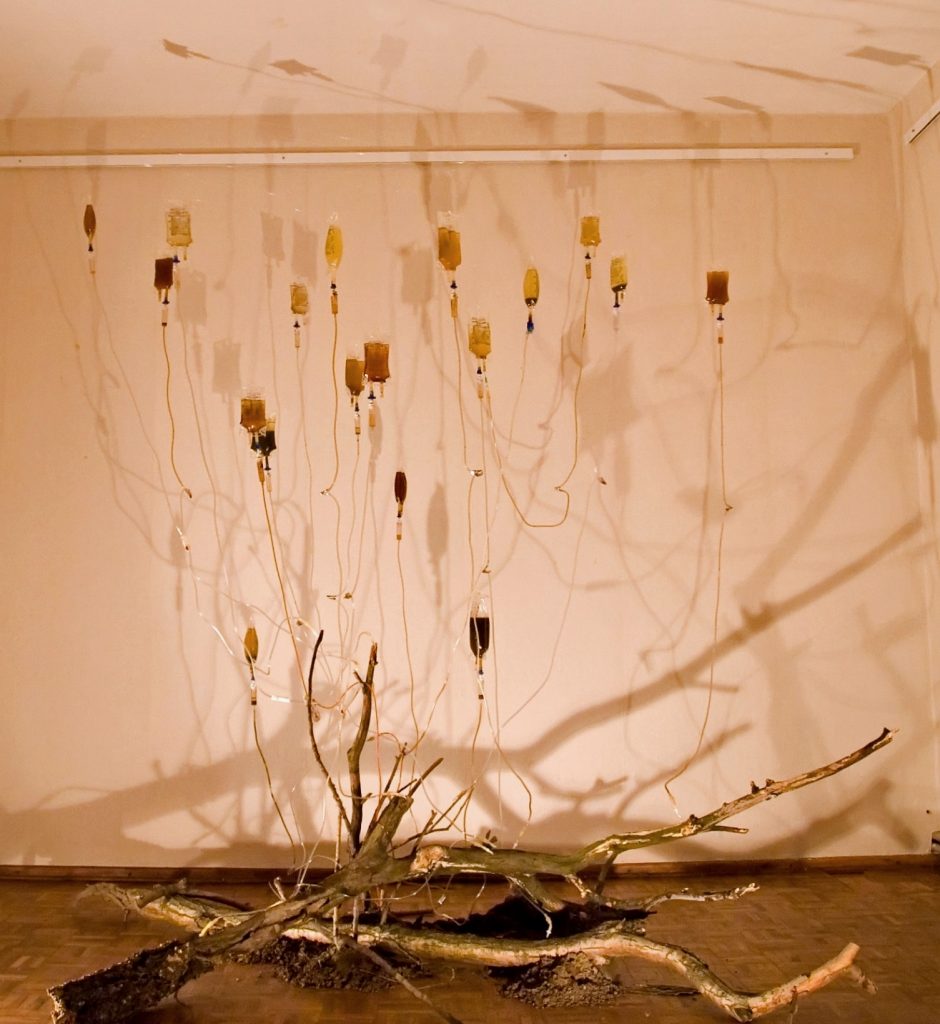
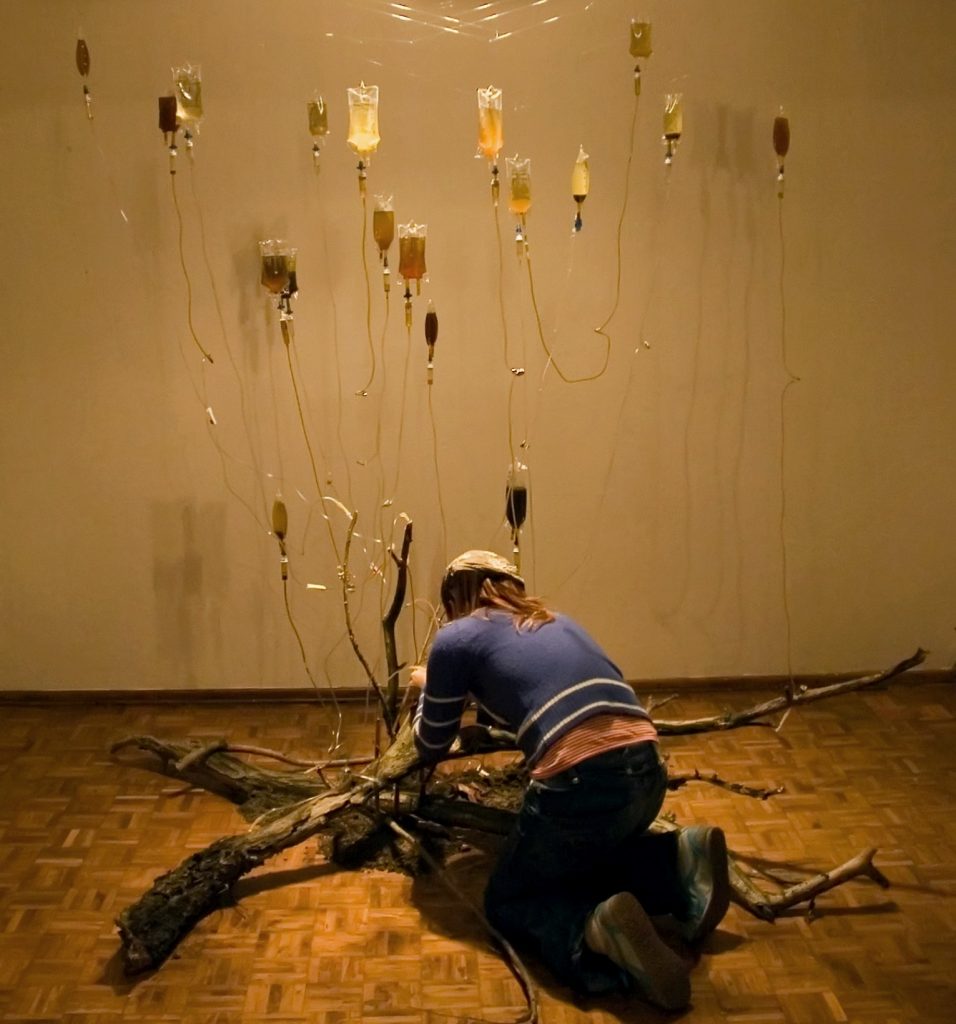
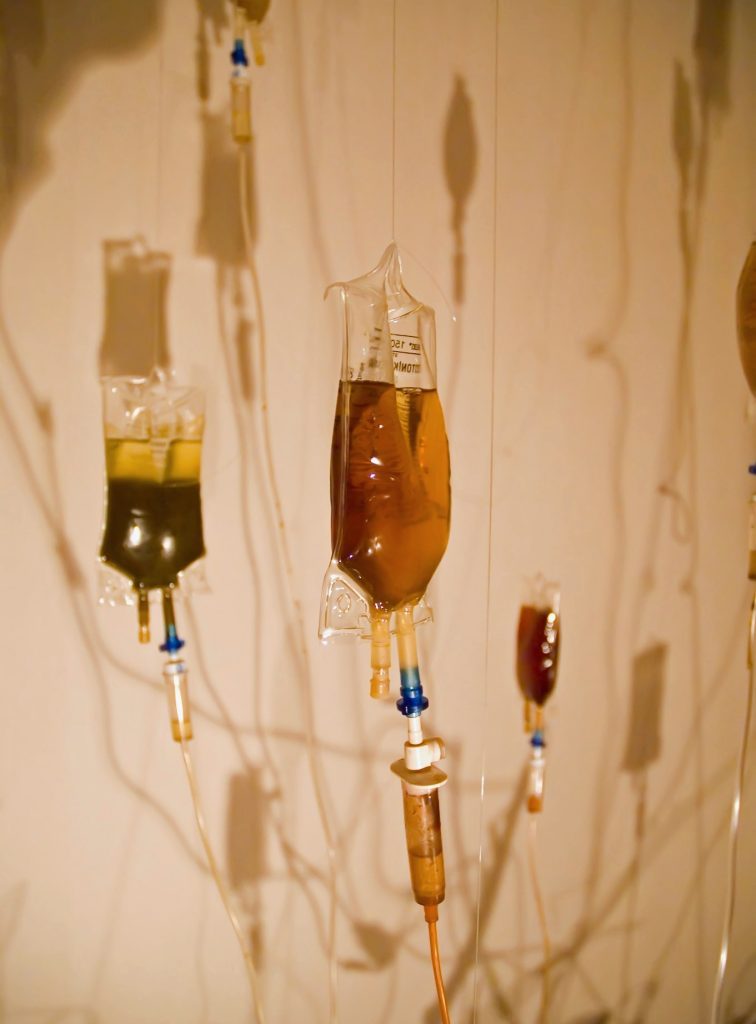
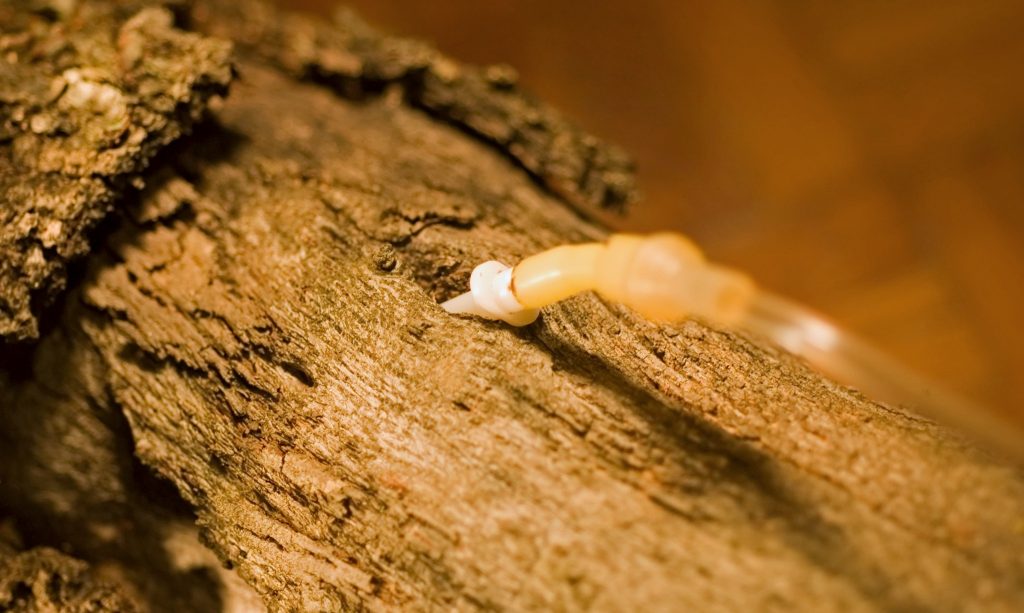
Serum Tree explores the fragile boundary between organic life and artificial systems of care.
The installation consists of a fallen oak tree trunk connected to multiple intravenous lines suspended above it. Each line carries plant-based liquids, collected from the surrounding environment, which slowly drip onto the surface of the tree and into the soil below.
By transferring a clinical system of support onto a natural body, the work constructs a condition in which life is externally sustained rather than self-generated. The act of care is displaced, raising questions about intervention, dependency, and the limits of restoration.
As the liquids accumulate, the environment begins to respond: moisture activates the soil, small plants emerge, and insects appear. These subtle transformations suggest a form of regeneration, yet one that remains uncertain and contingent. Suspended between decay and renewal, the installation does not attempt to restore the tree, but rather exposes the tension between sustaining life and prolonging its inevitable transformation.